
“`html
The Impact of Automation on Jobs: Challenges and Opportunities
As automation technology continues to advance at a breakneck pace, its impact on the workforce cannot be ignored. With the proliferation of machine learning, artificial intelligence, and robotics, automation is changing how we work across various industries. This shift presents both significant challenges and exciting opportunities. In this article, we explore the far-reaching effects of automation on jobs by breaking down specific industry implications, examining workforce needs, and discussing the broader socio-economic impacts. Additionally, we delve into how different sectors are coping with this change, highlight the priority areas needing attention, and look forward to the future of work in an increasingly automated world.
Image
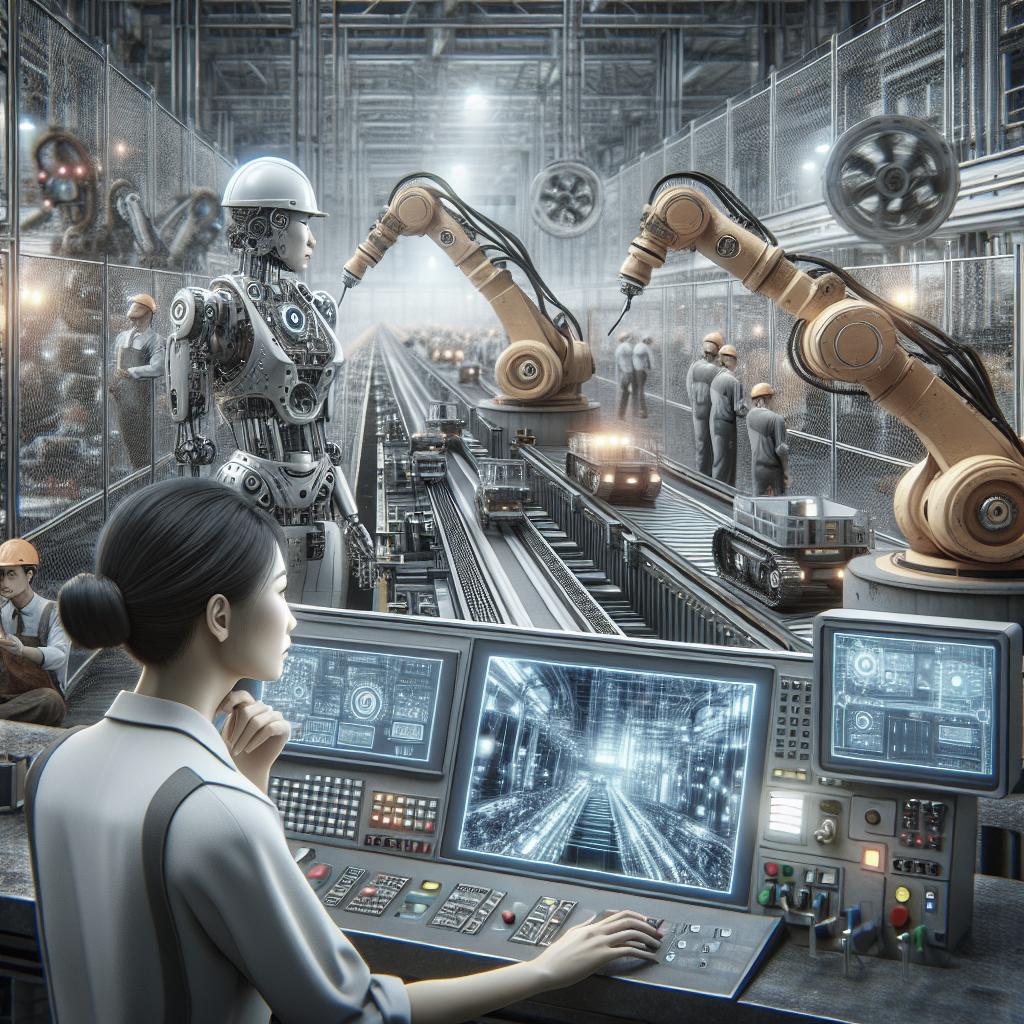
The concept of automation has been visually represented through various images depicting robots and AI in work environments. These images serve to portray the transformative shift in job functions, showcasing a blend of human and machine collaboration that is reshaping workplaces globally.
For instance, in manufacturing, images of robotic arms performing tasks such as assembly and sorting are commonplace. These images reflect the efficiency gains and precision brought about by automation. However, they also bring attention to the potential displacement of traditional manufacturing jobs, thus sparking a debate about job security in an automated future.
Image
Meanwhile, in the service sector, automation imagery often features customer service robots and AI-driven chatbots that streamline customer interactions. Such visuals exemplify increased efficiency in handling queries and processing transactions, which is crucial for businesses aiming to enhance user experience and reduce operational costs.
While these advancements are beneficial, they also introduce new challenges for employees accustomed to traditional service roles. These challenges highlight the need for reskilling initiatives to integrate human touch into increasingly automated sectors, ensuring career viability despite evolving technological landscapes.
Topics
Automation impacts several job sectors, each facing diverse challenges and opportunities. In the transportation industry, the rise of self-driving vehicles promises increased safety and efficiency. However, it also poses threats to the livelihoods of truck drivers and chauffeurs, raising questions about the broader societal impact of widespread adoption.
Similarly, in the healthcare sector, automation is enhancing the accuracy of diagnostics and patient care through AI algorithms. However, the delicate nature of medical professions means there are limits to automation’s reach, emphasizing the enduring importance of human judgment and care in patient interaction.
GAO Contacts
To adapt to these changes, the role of education and retraining becomes crucial. The Government Accountability Office (GAO) suggests that workforce planning and capacity assessments are necessary to align human capital with future demands. Through collaboration with educational institutions and industry stakeholders, GAO aims to address the gaps in skills that automation technology reveals.
Moreover, promoting investment in STEM (Science, Technology, Engineering, and Mathematics) education is critical to preparing the next generation of workers. Such initiatives would ensure a technologically literate labor force ready to thrive in an automation-driven job market.
Related Posts
Prioritizing the Needs of the Federal IT Workforce
The federal IT sector is under significant pressure to adapt to rapid automation and digital transformation. There is an urgent need to prioritize and address the federal IT workforce’s educational and training requirements as technologies evolve.
By emphasizing professional development and continuous learning, the federal government can maintain a competitive and efficient IT workforce ready to support automation initiatives while ensuring public sector services remain robust and reliable.
A Critical Shortage of Nurses
The healthcare sector faces an impending shortage of nurses partly attributed to the increased adoption of automation. While technology enhances service delivery efficiency, it cannot replicate the empathetic care provided by nurses, leading to an irreplaceable demand for skilled healthcare professionals.
Addressing this shortage requires targeted investment in nursing education and incentives to draw more candidates into the profession. Such measures ensure a balance between technological advancement and essential human healthcare service provision.
Helping Serve Those Who Have Served
As automation changes employment landscapes, it becomes essential to focus on supporting veterans transitioning to civilian jobs. By offering specialized training programs that align with new technological roles, veterans can leverage their skills in emerging sectors.
Providing resources and creating pathways for successful career transitions for veterans underscores an important societal commitment to those who served and ensures they remain integral participants in the evolving job market.
Related Products
There is an increasing demand for tools and resources that support companies and employees in navigating automation’s effects. Software companies are developing sophisticated tools to facilitate remote work, optimize business processes, and assist in developing automation strategies.
These products help businesses stay competitive while also providing insights into wise decision-making in the face of technological change. Investing in these resources is essential for businesses seeking to maximize automation’s potential while sustaining employee value in new work environments.
Product Number
The impact of automation on jobs can also be quantified through product numbers, which reflect the market demand for automation technologies. For instance, analytics tools that automate data processing are seeing increased usage, highlighting their critical role in modern business operations.
The growing inventory of such tools showcases the broadening acceptance of automation across industries. It encourages the development of complementary training for workers to effectively employ these technologies, thereby maintaining relevance in their respective fields.
Future Prospects
| Aspect | Key Points |
|---|---|
| Image | Automation visualizations depict human-machine collaboration, illustrating industry transformations and job displacement potential. |
| Topics | Sector-specific impacts with varying challenges and opportunities, including transport safety and healthcare diagnostic improvements. |
| GAO Contacts | Workforce planning and STEM education align human capital with automation demands, preparing future workers. |
| Related Posts | Federal IT, nursing shortages, and veterans transitioning represent focus areas requiring targeted educational strategies. |
| Related Products | Tools supporting remote work and process optimization are on the rise, proving essential for maximizing automation potential. |
| Product Number | Increased demand for automation tools highlights market trends, necessitating complementary worker training. |
“`