
“`html
How to Use Artificial Intelligence in Healthcare
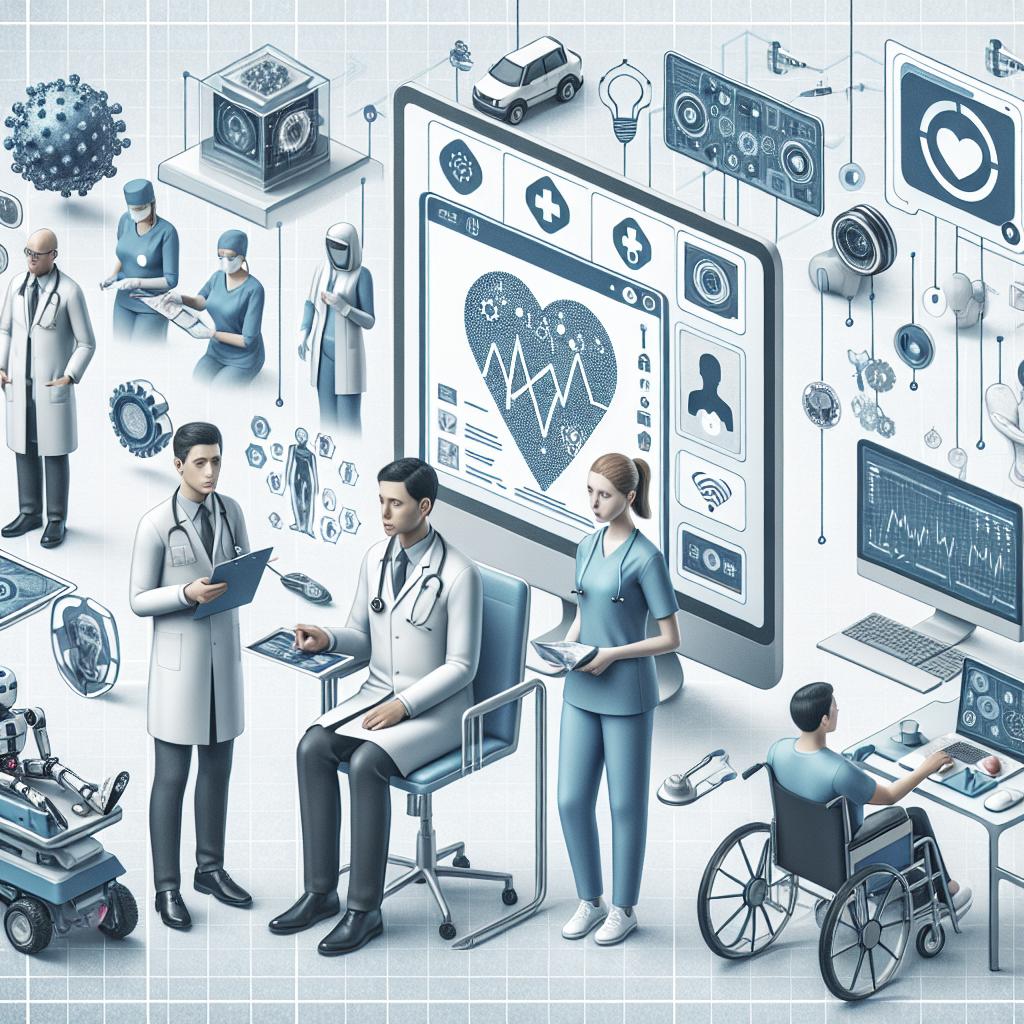
Artificial Intelligence (AI) is transforming multiple industries, and healthcare is no exception. From diagnostics to drug discovery and patient experience enhancements, AI is revolutionizing traditional healthcare practices. This article delves into the various uses of AI in healthcare, illustrates different real-world applications, and highlights companies leading the charge in AI innovations within this sector. Furthermore, we will address some crucial questions practitioners and patients may have regarding AI’s impact and benefits in medical contexts. Dive into this comprehensive exploration to understand how AI is charting a new course for the future of healthcare.
What Is AI in Healthcare?
AI in healthcare refers to the use of complex algorithms and software to mimic human cognition in analyzing complex medical data. The primary goal of health-related AI applications is to analyze relationships between prevention or treatment techniques and patient outcomes. This technology is poised to transform health systems, offering a continual learning process whereby AI tools improve as they collect more data.
AI extends beyond the subfield of predictive analysis, encompassing a wide array of functionalities within the sphere of health technologies, including process automation, clinical decision support, and image processing. Its ability to automatically glean insights, make connections, and pinpoint solutions has made it an integral component in many healthcare systems worldwide.
Uses for AI in Healthcare
AI’s applications in healthcare are diverse and extend into multiple domains. It is used in medical imaging for better diagnostic accuracy, predictive analytics for patient risk stratification, and personalized medicine tailored to individual patient profiles. AI algorithms are uniquely suited to identify patterns within complex datasets that would be invisible to human researchers.
These systems serve not only in analytical and predictive capacities but also facilitate discussion between healthcare providers and patients by offering basic health advice, thereby optimizing clinical workflows. This results in reduced human error and improved patient satisfaction, eventually leading to increased efficiency and productivity through automated procedures and decision-making processes.
Examples of AI in Healthcare
AI in Medical Diagnosis
AI-powered diagnostic tools are highly influential in the early detection of diseases. Machine learning algorithms process patient data to provide accurate diagnostic insights in real-time, sometimes with better precision than trained professionals. For instance, neural networks trained on imaging data are pivotal in identifying tumors or cardiac abnormalities.
Moreover, AI systems have the potential to democratize access to specialized healthcare by offering diagnostic capabilities in underserved regions where specialists are scarce. They work collaboratively with healthcare providers, ensuring more robust diagnostic solutions that significantly reduce time in identifying and responding to patient health concerns.
AI in Drug Discovery
The pharmaceutical industry leverages AI in drug discovery to predict how drugs will interact with the body. By processing large volumes of chemical and biological data, AI models identify potential drug candidates at a fraction of the time traditional methods require. This reduction in the timeline accelerates the development pipeline for new medications.
Startups and established companies alike are using AI to refine and select the most promising compounds, thereby significantly reducing the cost of bringing new drugs to market. AI algorithms help in identifying potential side effects and optimal dosages early in the drug development phase, improving safety and efficacy.
AI in Patient Experience
AI revolutionizes patient engagement by enhancing the experience through personalized care plans and reminders for medication compliance. Virtual health assistants and chatbots, powered by AI, provide accessible customer service and maintain continuous communication to assist patients with their queries.
Through AI-powered applications, patients can receive tailored health recommendations based on their medical history and lifestyle metrics. This fosters a more proactive approach to health management, thus reducing hospital readmissions and improving overall patient outcomes.
AI in Healthcare Data Management
Efficient data management is crucial as healthcare systems continue to digitize. AI assists in processing and organizing electronic health records, ensuring that healthcare providers can retrieve and utilize pertinent patient information swiftly and accurately. Automated systems decrease paperwork burdens, allowing clinicians more time to focus on patient care.
Furthermore, AI enhances the interoperability of information systems by creating an integrated health information environment. This ecosystem empowers healthcare professionals to make informed decisions based on comprehensive and up-to-date patient data.
AI in Robotic Surgery
AI extends its capabilities to robotic surgery, where machine learning algorithms assist surgeons in planning and executing complex procedures with heightened precision and control. These systems offer augmented visualization of surgical sites, leading to more effective interventions and patient outcomes.
Robotics in surgery is transforming less invasive procedures, reducing patient recovery time, minimizing complications, and improving surgical efficiency. AI’s role in these advancements is a testament to its transformative potential within operating rooms across the globe.
Companies Using AI in Healthcare
EliseAI
EliseAI specializes in developing conversational AI tools that facilitate more effective patient interaction. Their technologies are designed to improve the efficiency of administrative tasks in healthcare settings, acting as a bridge between patients and medical professionals by providing quick and accurate responses to common inquiries.
Evidation
Evidation measures health data through everyday digital interactions, helping understand, quantify, and influence health outcomes. By analyzing real-world data, Evidation provides insights into the factors affecting health and helps healthcare professionals tailor more precise and effective care plans.
Cohere Health
Cohere Health leverages AI to streamline healthcare authorization processes. The company’s platform uses data-driven insights to enhance healthcare provider collaboration, reduce administrative burdens, and ensure that decisions align with clinical best practices.
Flatiron Health
Flatiron Health utilizes AI to personalize cancer care by aggregating clinical data and making it accessible to researchers and healthcare providers. The company’s mission is to enhance cancer treatment decision-making, ultimately leading to better patient outcomes.
ZS
ZS specializes in leveraging AI for strategic decision-making within the healthcare industry. The company provides advanced analytic solutions that drive innovation and improve operational efficiencies, supporting healthcare organizations in navigating complex market dynamics.
Healthee
Healthee is an AI-driven platform that demystifies health insurance benefits for users, helping them navigate complex healthcare plans and make informed decisions about their coverage. By translating industry jargon into understandable language, Healthee empowers individuals to better manage their health expenditures.
Pfizer
Pfizer incorporates AI into its research and development initiatives to expedite drug discovery processes. The company utilizes machine learning algorithms to analyze large datasets, helping predict drug behavior and potential efficacy in early-stage clinical trials.
Takeda
Takeda Pharmaceuticals partners with AI companies to enhance its drug discovery pipeline. These collaborations enable Takeda to leverage AI in identifying new therapeutic targets and biomarkers, thus driving advancements in personalized medicine.
Enlitic
Enlitic applies AI in the field of medical imaging. Their technology is geared towards improving the speed and accuracy of image-based diagnostics, offering radiologists augmented tools to interpret complex medical images.
Babylon
Babylon Health utilizes AI-driven digital health services to provide patients with instant healthcare advice and professional consultations. By delivering healthcare through digital devices, Babylon aims to increase access and efficiency in patient care.
Butterfly Network, Inc.
Butterfly Network offers an innovative handheld ultrasound device that connects with smartphones, powered by AI to enhance imaging accuracy. The tool democratizes access to high-quality ultrasound technology, expanding its use in various healthcare settings.
CloudMedx
CloudMedx employs AI technology to deliver predictive analytics that enhance clinical workflows. Their platform helps healthcare providers anticipate patient needs and offers data-driven insights to inform treatment plans.
Biofourmis
Biofourmis integrates AI and machine learning to develop digital therapeutics. Their technology tracks patient vitals, predicting health deterioration before it occurs, which allows for preemptive intervention and personalized patient management.
Caption Health
Caption Health has revolutionized echocardiography by creating AI-driven software that guides clinicians through the ultrasound capturing process, ensuring high-quality imaging and diagnostics.
Corti
Corti leverages voice recognition and AI to assist emergency dispatchers in identifying cardiac arrest during emergency calls. This technology aids in saving precious seconds during life-or-death situations.
Atomwise
Atomwise applies AI to predict the effectiveness of drug compounds. Their technology analyzes molecular data to identify promising drug candidates, speeding up the initial phases of drug development.
Freenome
Freenome offers early cancer detection solutions through AI-based analysis of non-invasive blood samples. By identifying cancer-specific biomarkers, the company’s technology supports early diagnosis and intervention.
Recursion
Recursion leverages AI to map the effects of various compounds on human cells, accelerating the drug discovery process. Their unique approach combines AI with biological data to identify new therapeutic candidates.
Insitro
Insitro employs machine learning to model human disease and accelerate drug discovery. By integrating AI with high-throughput biology, they aim to unravel the complexities of disease mechanisms and improve treatment outcomes.
Owkin
Owkin uses AI to enhance the understanding of disease mechanisms by integrating multimodal data from various sources. Their research platform facilitates collaboration between healthcare institutions and equips researchers with tools to find meaningful insights.
Deep Genomics
Deep Genomics combines AI with genomic data to discover and develop genetically precise medicines. The company’s platform identifies genetic mutations that may lead to specific diseases, providing targeted treatment options.
IBM
IBM Watson is a prominent AI system applied in numerous healthcare applications, including clinical decision support and patient management. It processes massive datasets to assist healthcare professionals in making informed decisions.
InformAI
InformAI creates AI tools that improve diagnostic workflow efficiency for healthcare providers. Their solutions are integrated into existing platforms to enhance diagnostic accuracy in various medical fields.
Komodo Health Inc.
Komodo Health combines comprehensive datasets with AI analytics to derive actionable insights for healthcare providers. By mapping the patient journey and pinpointing inefficiencies, they support the enhancement of patient care solutions.
Oncora Medical
Oncora Medical develops AI-driven solutions for radiation oncology. Their technology focuses on predictive analytics and personalized treatment planning, providing oncologists with data-driven recommendations that enhance patient care.
AiCure
AiCure employs AI technology to monitor patient adherence to medication regimens through a combination of mobile devices and advanced software. Their aim is to ensure compliance and improve treatment outcomes.
PathAI
PathAI is known for creating AI-powered pathology tools that enhance diagnostic accuracy. By analyzing tissue samples with high precision, their technology advances the detection and treatment of complex diseases.
GRAIL
GRAIL focuses on early cancer detection via AI and genomic analysis. By identifying cancer signals in blood samples, they offer cutting-edge solutions to detect cancer at its earliest stages.
Linus Health
Linus Health is dedicated to neuroscience, using AI to detect and predict cognitive disorders. Their solutions provide clinicians with the tools necessary to intervene early and offer tailored treatment plans.
Viz.ai
Viz.ai combines video streaming technology with AI to detect strokes, facilitating rapid diagnosis and treatment in emergency medical settings. This technology significantly decreases the time to intervention, potentially saving lives.
Regard
Regard employs AI to support medical documentation and coding, which reduces the clerical burden on healthcare professionals. Their software integrates into existing systems, ensuring data accuracy and compliance.
Buoy Health
Buoy Health uses AI to provide users with an interactive symptom checker that offers guidance on medical decisions. This tool helps patients assess their symptoms and decide on whether to seek professional care.
Beth Israel Deaconess Medical Center
Beth Israel Deaconess Medical Center, in partnership with AI researchers, integrates machine learning algorithms into their clinical practices to enhance patient outcomes and optimize resource allocation within the healthcare facility.
Iterative Health
Iterative Health harnesses AI for optimizing clinical workflows, particularly in the identification and management of gastrointestinal conditions. Their tools augment clinicians’ ability to diagnose and manage patient care effectively.
VirtuSense
VirtuSense specializes in predictive fall prevention technology powered by AI. Their solutions analyze movement data to anticipate and mitigate the risk of falls among elderly patients, aiming to improve safety within healthcare environments.
Cleerly, Inc.
Cleerly uses AI to transform cardiac imaging for more precise understanding of heart disease. Their platforms evaluate heart imaging data in unprecedented detail, allowing for improved patient care and individualized treatment strategies.
Novo Nordisk
Novo Nordisk leverages AI in their research on diabetes and cardio-metabolic diseases. By applying machine learning algorithms, the company aims to personalize treatment approaches and discover new therapeutic innovations.
BioXcel Therapeutics
BioXcel Therapeutics employs AI to identify novel drug candidates, focusing on neuroscience and immuno-oncology. Their goal is to uncover therapeutic opportunities through the application of AI-driven analytics on vast biological data.
Valo Health
Valo Health integrates AI with human-centric data engineering to accelerate drug development. Their focus is on leveraging cutting-edge technology to streamline preclinical and clinical trial phases, bringing more effective therapies to market faster.
XtalPi
XtalPi merges quantum physics, AI, and cloud computing to predict crystal structures critical for pharmaceutical development. Their solutions enable faster, more efficient drug formulation processes, advancing research efforts significantly.
BenevolentAI
BenevolentAI applies machine learning to improve drug discovery, aiming to dramatically reduce the time and cost associated with bringing new drugs to market. Their models identify potential drug candidates and predict biological possibilities.
Deepcell, Inc.
Deepcell employs machine learning to analyze cells’ morphological features, aiding in cell classification and disease diagnosis. Their platform enhances biological research and provides deeper insights into complex cellular dynamics.
Iodine Software
Iodine Software offers AI solutions that refine clinical documentation improvement processes. Their technology ensures accurate coding and billing, helping healthcare providers attain financial integrity and streamline operations.
Kaia Health
Kaia Health focuses on addressing musculoskeletal issues using AI-based mobile applications. Their technology provides users with exercises tailored to alleviate pain and improve mobility, promoting healthier lifestyles.
Spring Health
Spring Health uses AI to provide personalized mental health care recommendations. By evaluating numerous data points, their platform suggests appropriate treatment plans, helping individuals access tailored support efficiently.
Twin Health
Twin Health leverages AI to create precise digital twins of individual bodies, predicting health outcomes based on detected changes in the biological and lifestyle data of users. This predictive modeling aids in preventive healthcare.
Qventus, Inc
Qventus applies AI to optimize healthcare operations, focusing on areas like emergency department efficiency and staff scheduling. Their solutions streamline workflows, contributing to improved patient care and operational performance.
Cleveland Clinic
Cleveland Clinic is at the forefront of incorporating AI into patient care strategies. The organization utilizes advanced predictive analytics to enhance clinical decision-making and optimize treatment plans across various medical specialties.
Johns Hopkins Medicine
Johns Hopkins Medicine harnesses AI for precision medicine, using large datasets to improve diagnostics, tailor treatments, and monitor patient outcomes. Their initiatives aim to advance personalized patient care while enhancing research capabilities.
One Drop
One Drop uses AI-powered applications to aid in diabetes management. Their platform provides real-time monitoring and insights on blood glucose levels, empowering individuals to take control of their health through informed decisions.
Subtle Medical
Subtle Medical develops innovative AI tools aiming to enhance medical imaging techniques. Their solutions improve diagnostic accuracy and reduce scan times, ultimately improving patient experiences and imaging workflows.
Twill
Twill offers AI-driven mental health solutions centered around providing comprehensive support through monitoring and personalized interventions. Their platform connects users with appropriate mental health resources, catering to individual needs.
Augmedix
Augmedix utilizes AI to transform electronic health record (EHR) entries, alleviating the documentation burden for physicians. Their service enhances clinical productivity, enabling healthcare providers to focus more on patients.
Greenlight Guru
Greenlight Guru provides AI tools for medical device manufacturing, focusing on quality management systems that ensure compliance with healthcare regulations. Their platform simplifies the regulatory landscape, promoting safer medical device innovations.
Tempus AI
Tempus AI collects and analyzes data to revolutionize how rare diseases and cancers are treated. Their powerful AI models support personalized oncology, helping clinicians make data-driven decisions based on genome and transcriptome sequencing data.
ClosedLoop
ClosedLoop uses AI to create predictive models that enhance population health management. Their platform seeks to improve patient outcomes by predicting risks proactively and recommending timely interventions.
Beacon Biosignals
Beacon Biosignals employs advanced neural signal processing tools to interpret brain activity data accurately. Their solutions support neurotherapeutic development and assist clinicians in diagnosing and managing neurological conditions.
Proscia
Proscia offers AI-powered digital pathology platforms that streamline workflows and boost diagnostic accuracy. Their technology is designed to integrate with existing laboratory systems, improving the reliability of pathological assessments.
H2O.ai
H2O.ai provides businesses with AI solutions that democratize data analytics. In healthcare, their platform aids in predicting patient outcomes and improving operational efficiency, making AI accessible to healthcare providers globally.
AKASA
AKASA leverages AI to automate financial processes within healthcare organizations. Their solutions help in managing billing, claims, and revenue cycle operations, ensuring financial sustainability and reducing administrative burdens.
Vicarious Surgical
Vicarious Surgical integrates surgical robotics with AI to assist surgeons during operations. Their technology offers a minimally invasive surgical approach, improving precision and patient outcomes while reducing recovery times.
Accuray
Accuray provides AI-infused radiosurgery solutions that tailor radiation doses precisely to tumor shapes, maximizing therapeutic benefits while minimizing exposure to surrounding healthy tissues. Their technology enhances treatment efficacy for cancer patients.
Intuitive
Intuitive is widely known for its da Vinci Surgical System, which utilizes AI technology to extend surgeons’ capabilities. Their systems ensure less invasive surgical procedures, shortening recovery times and enhancing precision in the operating room.
Carnegie Mellon University
Carnegie Mellon University leverages AI research in computational healthcare, developing innovative technologies that assist with healthcare challenges. Their interdisciplinary teams produce solutions ranging from robot-assisted surgeries to advanced data analytics.
Microsure
Microsure’s robotic systems enhance microsurgical procedures through precise movements and expanded capabilities, driven by AI technology. Their solutions offer new possibilities for intricate surgeries beyond human limitations.
Laudio
Laudio utilizes AI to streamline workforce management in healthcare settings. Their platform assists in staff scheduling, performance monitoring, and strategic planning, resulting in improved employee satisfaction and operational efficiency.
Definitive Healthcare
Definitive Healthcare provides AI-driven tools for healthcare commercial intelligence. Their solutions support strategic decisions by offering insights into healthcare market trends, procurement, and provider dynamics.
Formation Bio
Formation Bio uses AI to design advanced therapeutics tailored to individual patient genetics. By unraveling genetic complexities, their approach aims to deliver more efficient treatments and improve patient care.
Strive Health
Strive Health combines clinical data with AI analytics to develop renal care solutions, focusing on early-stage intervention to slow disease progression. Their tools empower healthcare providers to optimize management for at-risk populations.
IMO Health
IMO Health offers AI-based clinical terminology solutions that enhance EHR entries and coding accuracy. Their technology enables consistent, interoperable captures of patient records for improved documentation and quality care.
Artera
Artera develops predictive analytics platforms fueled by AI, concentrating on providing insights for enhanced cancer care. Their solutions analyze clinical data to identify efficient therapeutic plans, assisting oncologists in personalized treatment delivery.
Frequently Asked Questions
What is AI in healthcare?
AI in healthcare refers to utilizing advanced algorithms and technologies to mimic human cognition, allowing systems to learn, reason, and self-correct when analyzing medical data. It encompasses a broad spectrum of applications, from diagnosis and treatment plan development to administrative process optimization and beyond.
How is AI used in healthcare?
AI is employed in healthcare for various purposes, including improving diagnostic accuracy, predicting patient outcomes, personalizing treatments, enhancing patient engagement, and streamlining administrative tasks. Machine learning, natural language processing, and robotics are specific AI technologies applied within healthcare.
What companies are using AI in healthcare?
Numerous companies are leveraging AI in healthcare, ranging from tech giants like IBM to startups like Freenome and Atomwise. These organizations utilize AI to solve critical healthcare challenges and innovate patient care approaches, diagnostics, treatment plans, and much more.
What are the pros and cons of AI in healthcare?
The pros of AI in healthcare include improved diagnostic accuracy, enhanced operational efficiency, personalized patient care, and reduced healthcare costs. However, challenges remain, such as data privacy concerns, the need for significant investment, potential biases in machine learning algorithms, and regulatory hurdles.
Final Thoughts
| Section | Summary |
|---|---|
| What Is AI in Healthcare? | AI in healthcare refers to using advanced algorithms to analyze complex medical data for improved outcomes and efficiency. |
| Uses for AI in Healthcare | AI applications include diagnostics, predictive analytics, personalized medicine, patient engagement, and data management. |
| Examples of AI in Healthcare | Notable uses include medical diagnosis, drug discovery, patient experience enhancement, data management, and robotic surgery. |
| Companies Using AI in Healthcare | Dozens of companies, including IBM, Pfizer, and Freenome, leverage AI to innovate healthcare solutions across the globe. |
| Frequently Asked Questions | Key discussions on AI definitions, applications, leading companies, and potential advantages and drawbacks in healthcare. |
“`